UNİBİS Editör
11 October 2026In high-volume commercial baking and industrial food production, lipid selection serves as the decisive factor between mediocre output and superior product consistency. Whether preparing delicate sponge formulations or formulating deep-fried cake specialties—such as traditional cake doughnuts, funnel cakes, and crullers—the choice of frying media dictates sensory appeal, shelf stability, and operational efficiency. When commercial bakeries and foodservice operators source a gallon of frying oil for cake production or scale up to multi-ton bulk shipments, they must look beyond basic liquid measurements. Culinary performance hinges on precise lipid chemistry, thermal resistance, and optimal fatty acid profiles that preserve product texture while preventing unappealing oil absorption. As Turkey's premier vegetable oil, ghee, and industrial margarine manufacturer, UNİBİS engineers high-performance fats designed to satisfy stringent international production parameters and exceed commercial consumer expectations.
The Critical Role of Proper Fat & Margarine Selection in Food Manufacturing
Fats and oils are functional building blocks that alter physical dough rheology, moisture retention, and finished mouthfeel. Choosing an inappropriate fat profile leads to structural collapse, greasiness, or premature staling. In industrial food manufacturing, the correct fat solution provides distinct structural advantages:
- Crumb Structure and Tenderness: High-grade frying and baking oils coat flour proteins (glutenin and gliadin), inhibiting gluten matrix development. This tenderizing mechanism delivers a fine, uniform cake crumb that holds moisture without falling apart during processing or packaging.
- Optimized Dough Rise and Volume: The incorporation of stable, heat-resistant liquid oils and tailored margarines ensures maximum gas retention during leavening. This stability creates an open, airy lift in chemically leavened cake batters and fried pastries.
- Precision Emulsification: Specialized vegetable oils and bakery fats integrate uniformly with aqueous batter phases. Proper emulsification prevents liquid phase separation, leading to consistent batter viscosity and standardized piece weights on high-speed depositor lines.
- Flakiness and Layer Integrity: For laminated pastries, solid fat fractions with specific melting points create micro-barriers between dough sheets, generating crisp, distinct layering rather than dense compaction.
- Finished Product Lightness: Premium frying oils engineered for cake products possess high oxidative stability indices (OSI), allowing immediate surface heat transfer. This rapid crust setting seals the exterior instantly, minimizing oil uptake and preserving an extraordinarily light, non-greasy interior.
Application Guidelines for Different Bakery & Food Categories
Every commercial bakery vertical presents unique structural demands that necessitate customized lipid formulations to maintain high yields and uniform quality.
Croissants & Viennoiserie
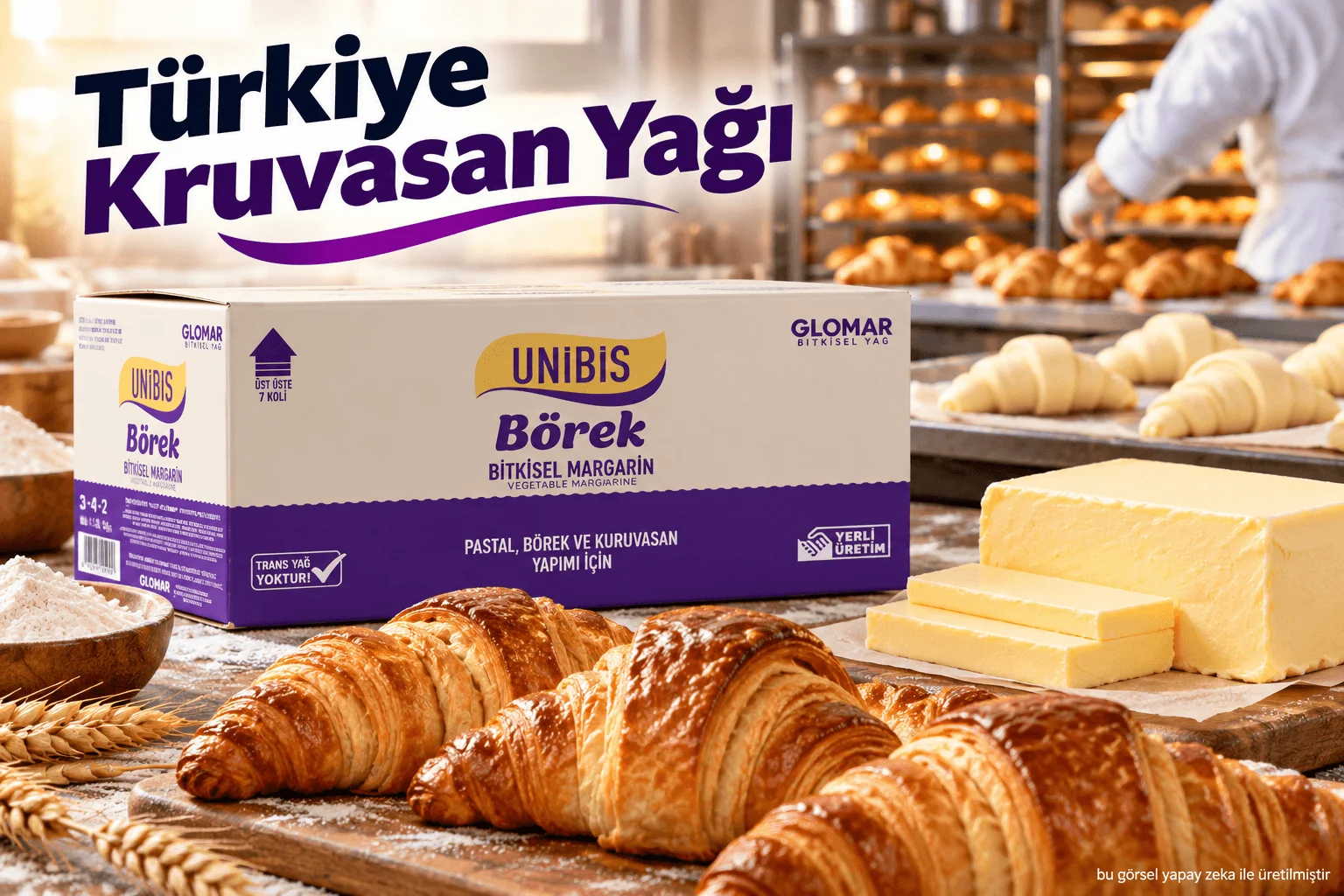
Laminated yeast doughs demand industrial sheeting margarines characterized by broad plasticity and uniform crystallization. The fat must maintain its structural elasticity under mechanical sheeting without fracturing or melting prematurely into the gluten layers, delivering thin, golden honeycomb crumb architectures upon baking.
Puff Pastry & Flaky Crusts
Non-yeasted laminated doughs require high-melting-point puff pastry fats. The mechanical separation of flour layers relies entirely on the steam generated between fat barriers during baking. UNİBİS industrial puff margarines provide the thermal threshold necessary to resist shear stress on automated production lines, ensuring maximum volume and distinctive crispness.
Traditional Baklava & Mediterranean Pastry
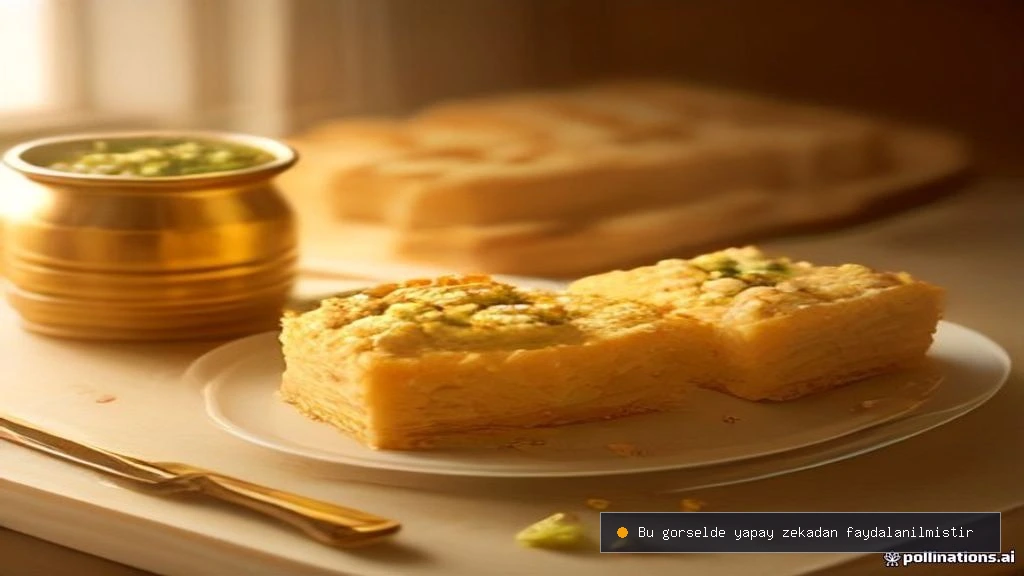
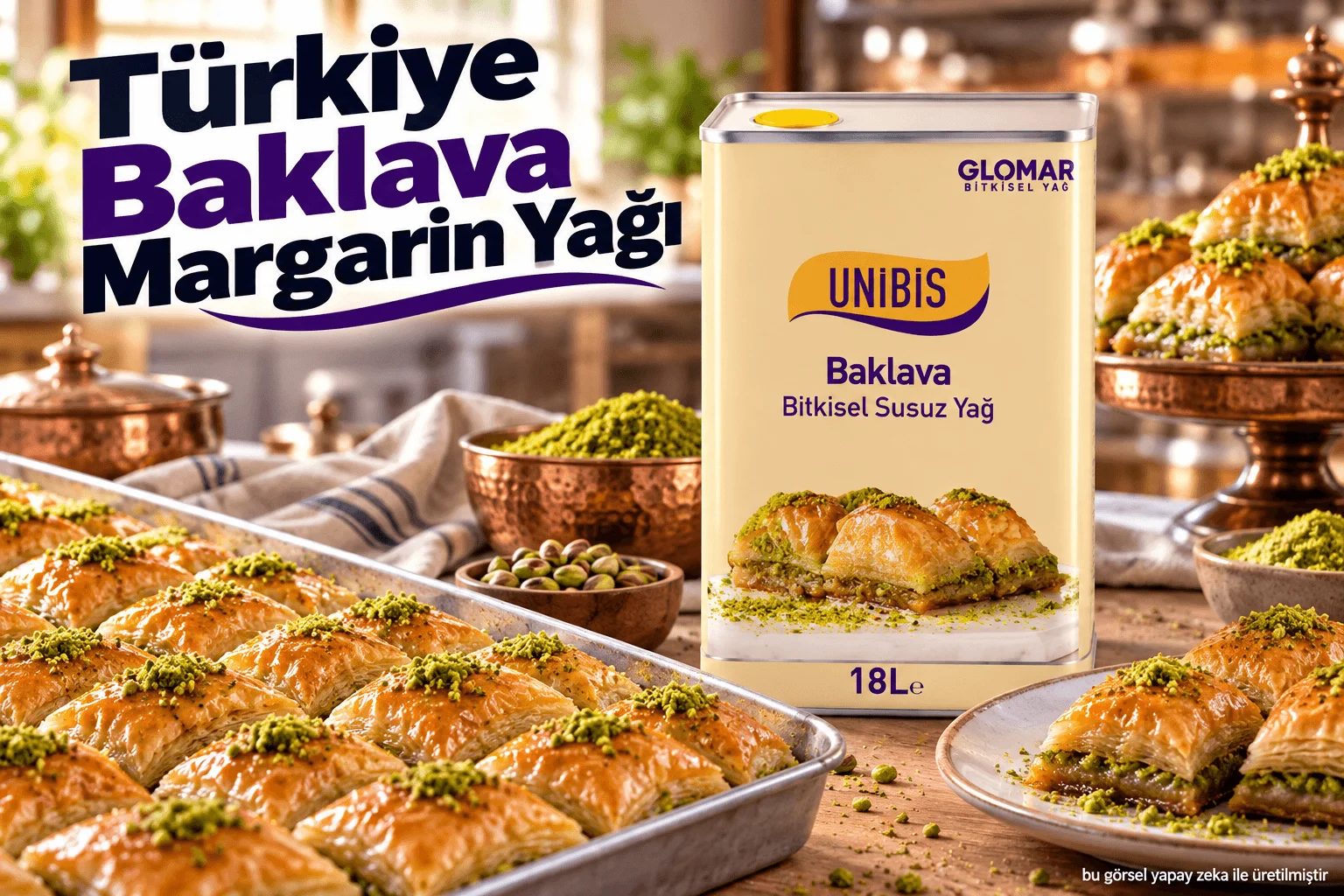
Authentic baklava production demands purified, clarified fat solutions with low moisture levels and high heat tolerance. UNİBİS vegetable ghee formulations duplicate traditional butter notes while providing zero-splatter characteristics and high clarity. This prevents phyllo sheets from burning and imparts an enduring, rich aromatic profile that elevates sensory evaluations.
Industrial Cake Doughnuts & Fried Specialties
When measuring a gallon of frying oil for cake doughnuts, beignets, and carnival-style fried cakes, the frying medium must balance thermal durability with clean flavor release. Because cake batters contain high sugar and moisture levels compared to yeast doughs, the oil must withstand accelerated caramelization residues. Specially refined, high-smoke-point vegetable oils prevent premature smoking and polymerization, ensuring uniform golden coloration and rapid crust crystallization.
Cookies, Biscuits, and Shortbreads
Rotary-moulded and wire-cut cookie formulations necessitate shortenings and margarines with strict solid fat content (SFC) profiles. The fat must ensure structural spread control in tunnel ovens, yielding a crisp snap or a tender, melt-in-the-mouth texture without surface oil bleeding during extended shelf storage.
Master Baker & Chef Production Tips
Achieving reproducible excellence in industrial baking requires strict compliance with thermal and mechanical control protocols. Professional operators should implement these four core production benchmarks:
1. Strict Dough and Batter Temperature Control: Maintain dough and batter temperatures between 18°C and 22°C prior to cooking or baking. If the batter becomes excessively warm, the fat fraction will liquify prematurely, weakening air cell entrapment. For fried cake products, cold batter entering hot oil causes sudden temperature drops, which exponentially increases oil absorption.
2. Uniform Fat Incorporation: In batter mixing, incorporate liquid oils gradually during the secondary mixing phase. This staged introduction ensures the flour starches and proteins hydrate fully before being coated by the lipid barrier, preventing dry spots and uneven density.
3. Enforced Resting Periods: Laminated doughs and chemically leavened cake batters require calculated resting stages. Resting allows gluten structures to relax, reduces mechanical stress, and lets fat matrices stabilize, preventing dimensional shrinkage and uneven edge curl in tunnel ovens or continuous fryers.
4. Controlled Frying Temperatures: When utilizing high-performance frying media for cake items, maintain oil temperatures precisely between 185°C and 193°C (365°F to 380°F). Temperatures below this threshold result in heavy, grease-saturated products, while temperatures above 195°C scorch the sugary exterior while leaving the inner crumb undercooked.
Food Safety, Halal Certification & ISO Quality Standards
Industrial food processors and global distribution networks require verified supply chain integrity. UNİBİS produces vegetable oils, shortening blends, and industrial margarines inside fully automated, closed-loop processing plants designed according to current Good Manufacturing Practices (cGMP).
Our processing centers operate in strict compliance with ISO 9001 Quality Management and ISO 22000 Food Safety Management frameworks, reinforced by Hazard Analysis Critical Control Point (HACCP) programs. Every export lot undergoes rigorous laboratory analysis to monitor Free Fatty Acids (FFA), Peroxide Value (PV), and moisture content, guaranteeing exceptional oxidative stability. Furthermore, our complete portfolio carries certified Halal documentation, assuring our commercial partners that their base ingredients conform to global dietary standards, non-hydrogenated formulation requirements, and rigorous zero-trans-fat regulations.
Optimal Storage & Shelf-Life Best Practices
Even the most resilient industrial frying oils and bakery margarines degrade if subjected to poor environmental conditions. Food producers must protect their bulk lipid stock by adhering to standard warehousing protocols:
- Photoprotection: Store liquid oils away from direct sunlight and high-output artificial UV sources. Photo-oxidation accelerates radical formation, leading to off-flavors and swift rancidity.
- Regulated Ambient Temperatures: Maintain storage facilities at a consistent 15°C to 24°C (59°F to 75°F). Avoid cyclical temperature swings that trigger sweating inside packaging, which introduces free moisture into the oil and accelerates hydrolytic rancidity.
- Odor-Free Environment: Vegetable oils and bakery fats readily absorb volatile ambient scents. Store inventory in clean, dedicated dry-goods zones isolated from spices, chemical cleaners, or aromatics to protect pure taste profiles.
Frequently Asked Questions (FAQs)
Can standard liquid vegetable oil replace specialized frying oil when producing cake doughnuts?
While basic liquid vegetable oil can be used, specialized industrial frying oils are refined to deliver significantly higher smoke points, lower foaming tendencies, and greater resistance to thermal breakdown. Because cake batters release sugar, moisture, and starches directly into the vat, specialized frying media maintain their chemical integrity longer, resisting darkening and preventing oily flavor transfer to the finished product.
How does fat absorption rate affect the commercial shelf life of packaged fried cakes?
Excessive fat absorption introduces elevated levels of unsaturated lipids into the product interior, accelerating lipid oxidation during retail storage. Furthermore, excess oil migrates outward, softening the crisp exterior crust and compromising package seals. Utilizing high-stability frying oil within precise thermal ranges minimizes overall absorption, creating a drier internal matrix that prolongs fresh sensory qualities.
What indicates that a commercial fryer's cake oil needs immediate replacement?
Operators should monitor Total Polar Materials (TPM) using calibrated digital meters; values exceeding 24% indicate the oil must be discarded. Visual indicators include dense, persistent surface foaming, an acrid smoking point below standard operating temperatures, deep dark brown discoloration, and a noticeable bitter astringency in the finished cake crumb.
Wholesale Supply & Export Advantages with UNİBİS Turkey
Operating as a global food brand requires an ingredient supplier that understands scale, consistency, and global logistics. Based in Turkey—a transcontinental logistics crossroads—UNİBİS offers significant freight advantages, reduced shipping transit windows, and supply chain reliability for partners across Europe, the Middle East, North Africa, Central Asia, and the Americas.
Whether your manufacturing operations demand bulk liquid frying oil formats, convenient intermediate bulk containers (IBCs), standard export drums, or retail-ready packaging, UNİBİS provides flexible B2B solutions tailored to your operational specifications. Our technical formulation team works directly with large-scale industrial bakeries and HoReCa distributors to configure specific melting points, solid fat profiles, and packaging dimensions. Partner with UNİBİS Turkey to strengthen your processing lines with high-performance vegetable oils, ghee, and industrial margarines engineered to deliver unmatched bakery excellence across the global marketplace.