UNİBİS Editör
05.10.2026As Turkey's leading manufacturer of vegetable oil, ghee, and industrial margarine, UNİBİS understands the intricate demands of the modern industrial bakery. In the competitive landscape of commercial baking, consistency, quality, and efficiency are paramount. Nowhere is this more evident than in the production of laminated pastries, where the choice of fat directly dictates the final product's texture, rise, and overall appeal.
Choosing the right puff pastry margarine is not merely a purchasing decision; it is a strategic one that profoundly impacts culinary performance. The delicate balance of flakiness, the impressive lift, and the satisfying crispness of a perfectly baked croissant or puff pastry are all directly attributable to the properties of the margarine used. At UNİBİS, we pride ourselves on formulating industrial margarines that meet and exceed these exacting standards, providing our partners with products that ensure consistent quality and superior results every single time.
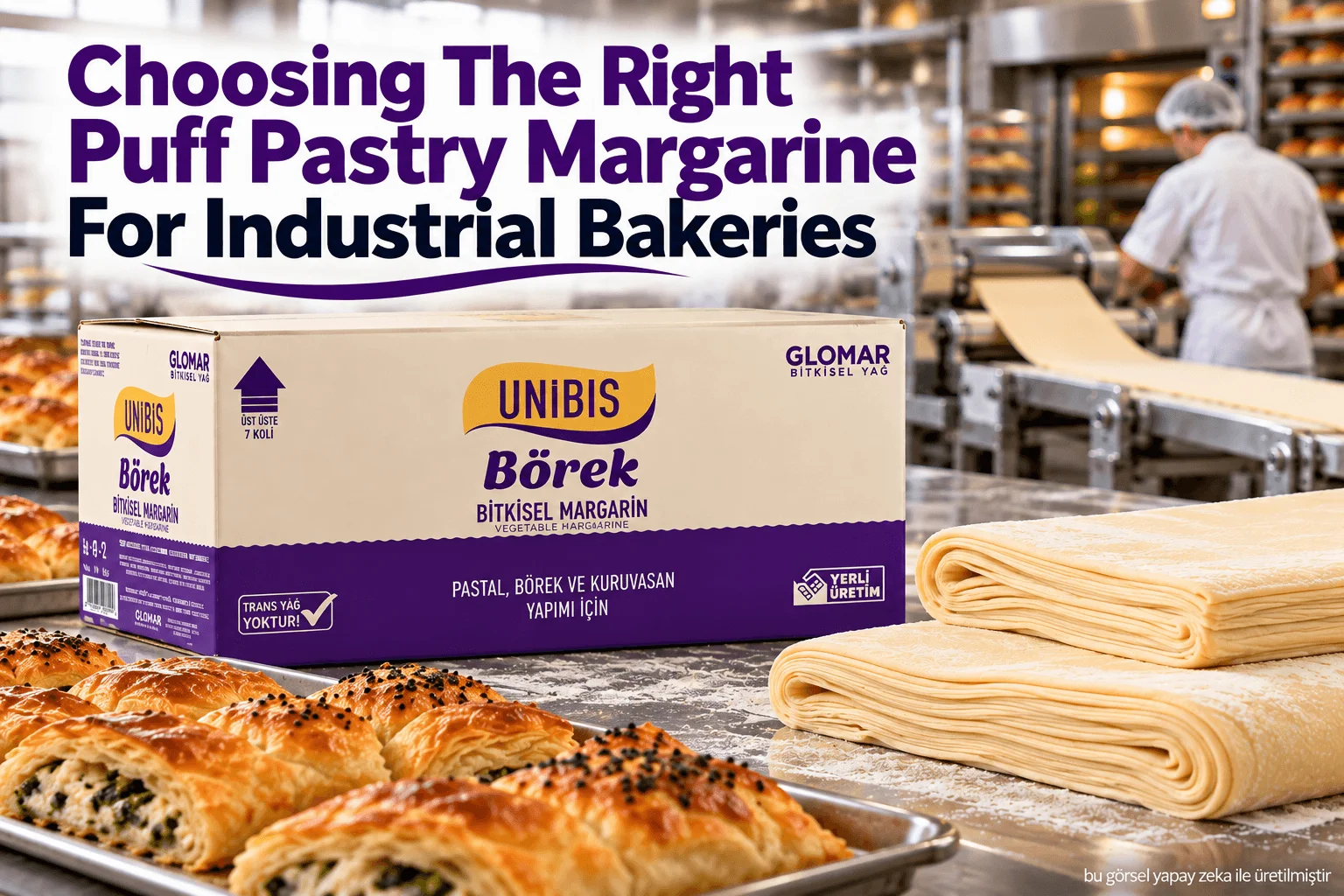
Our commitment to excellence ensures that UNİBİS puff pastry margarines deliver optimal plasticity, melting profile, and emulsification properties, allowing industrial bakeries to achieve the desired layering and texture that consumers crave. This guide aims to equip commercial bakeries, food manufacturers, distributors, chefs, and HoReCa buyers with the authoritative insights needed to make informed decisions about their fat selection, ensuring their products stand out in a crowded market.
The Critical Role of Proper Fat & Margarine Selection in Food Manufacturing
The fat chosen for laminated doughs is arguably the most crucial ingredient after flour and water. Its unique physical and chemical properties are responsible for the characteristic structure and mouthfeel of products like puff pastry and croissants. Understanding these roles is key to achieving consistent, high-quality results at an industrial scale.
- Dough Rise and Lamination: The primary function of puff pastry margarine is to create distinct, separated layers within the dough. During baking, the water content within the margarine turns into steam, which is trapped between these layers. This steam pressure forces the layers apart, resulting in the significant rise and airy structure characteristic of puff pastry. A margarine with the correct plasticity and melting point is essential to maintain these layers without breaking or merging during rolling and baking.
- Flakiness and Crispness: The separation of layers, facilitated by the margarine, directly contributes to the desired flakiness. As the pastry bakes, the fat melts and coats the gluten strands, preventing them from forming a dense, chewy crumb. This results in a delicate, crisp texture that shatters beautifully with each bite. The quality of flakiness is a direct indicator of the margarine's performance.
- Crumb Structure and Tenderness: Beyond flakiness, the margarine influences the overall crumb structure. It contributes to a tender, melt-in-the-mouth quality by interfering with gluten development, preventing the dough from becoming tough. A well-chosen margarine ensures an even, open crumb structure throughout the product.
- Emulsification and Workability: Industrial margarines are complex emulsions of fat and water. The emulsifiers within the margarine play a vital role in stabilizing the emulsion, which in turn affects the workability of the dough. Proper emulsification ensures the margarine remains pliable and consistent during the laminating process, preventing it from oiling out or becoming too stiff. This consistency is crucial for uniform layering and preventing dough tearing.
- Lightness and Mouthfeel: The right fat contributes to a sense of lightness in the finished product, preventing it from feeling greasy or heavy. A clean melting profile ensures that the fat dissipates pleasantly in the mouth, leaving a desirable, non-cloying aftertaste. This contributes significantly to the overall sensory experience and consumer satisfaction.
- Flavor and Aroma: While often chosen for its functional properties, margarine also contributes to the flavor profile. High-quality industrial margarines offer a neutral or subtly buttery flavor that complements the other ingredients without overpowering them, ensuring the authentic taste of the pastry shines through.
Application Guidelines for Different Bakery & Food Categories
UNİBİS offers a versatile range of industrial fats and margarines, each formulated to excel in specific applications. While our focus here is on puff pastry, understanding the broader spectrum of applications highlights the importance of tailored fat solutions.
Puff Pastry & Croissants
For classic puff pastry and croissants, the key is a margarine with exceptional plasticity and a controlled melting point. Our specialized puff pastry margarines are designed to be firm yet pliable at typical dough handling temperatures (around 15-20°C). This allows for multiple folds and turns without tearing the dough or melting the fat prematurely. The high melting point ensures the margarine remains solid enough during baking to create steam pockets before fully melting, delivering maximum lift and distinct, crisp layers. For croissants, a slightly richer, more buttery flavor profile might be preferred, which UNİBİS can provide through specific formulations.
Baklava
Baklava, a celebrated layered dessert, often benefits from fats that impart a specific crispness and rich flavor. While traditional recipes might call for ghee, UNİBİS offers specialized margarines that provide similar textural benefits – extreme crispness and a golden finish – along with excellent stability and extended shelf life, making them ideal for large-scale production without compromising authentic taste.
Cookies & Biscuits
For cookies and biscuits, the choice of fat significantly influences spread, texture (chewy vs. crisp), and mouthfeel. Margarines designed for these applications have different creaming properties and melting profiles to achieve desired characteristics such as uniform spread, tender crumb, or a satisfying crunch. UNİBİS provides a range of products tailored for various cookie types, from shortbread to chewy chocolate chip.
Frying Applications
While distinct from laminated pastries, UNİBİS also manufactures high-performance frying fats and margarines. These products are characterized by high smoke points, neutral flavor, and excellent oxidative stability, ensuring a clean frying environment and extending the shelf life of fried products. They are engineered to minimize oil absorption and deliver a crisp, non-greasy finish.
Culinary Applications
Beyond baking and frying, UNİBİS industrial margarines are utilized in a wide array of culinary applications, including sauces, gravies, and general cooking. These formulations focus on emulsification stability, flavor neutrality, and heat resistance, providing chefs and food manufacturers with reliable ingredients for diverse food preparations.
Master Baker & Chef Production Tips
Even with the finest ingredients, achieving perfection in laminated pastries requires skill and adherence to best practices. Here are essential tips for industrial bakeries working with puff pastry margarine:
- Dough Temperature Control: Maintaining consistent dough and fat temperatures is paramount. The ideal temperature range for laminating is typically between 15°C and 20°C. If the dough is too warm, the margarine will melt and seep into the dough, destroying the layers. If it's too cold, the margarine will be too brittle and crack, also compromising the layers. Use temperature-controlled environments and machinery whenever possible.
- Margarine Tempering: Ensure the puff pastry margarine is tempered correctly before incorporation. It should be pliable but firm, similar in consistency to the dough. This allows it to spread evenly without tearing the dough or becoming greasy. Pre-conditioning the margarine to the correct temperature is a crucial preparatory step.
- Precise Fat Incorporation: The method of incorporating the fat into the dough (e.g., block method, grated method) must be executed precisely. For industrial applications, specialized laminating equipment ensures uniform distribution. The goal is to encase the fat completely within the dough, creating a clean interface between layers.
- Consistent Rolling and Folding: Industrial laminators provide the necessary precision for consistent rolling and folding. Each fold (or "turn") must be uniform to create even layers. Avoid overworking the dough, which can develop gluten too much and make it tough.
- Adequate Resting Periods: Critical for gluten relaxation. After each turn or a series of turns, the dough needs to rest in a refrigerated environment (typically 4°C) for at least 20-30 minutes, or longer depending on the specific recipe and dough strength. This prevents shrinkage during baking and allows the gluten to relax, making the dough easier to work with for subsequent turns.
- Optimal Baking Temperature: While not directly related to margarine handling, the baking temperature is crucial for achieving the desired rise and crispness. A hot oven (typically 190-220°C) provides the rapid heat needed to convert the margarine's water content into steam quickly, ensuring maximum lift before the fat fully melts and escapes.
Food Safety, Halal Certification & ISO Quality Standards
At UNİBİS, our unwavering commitment to food safety and quality is at the core of our operations. For industrial bakeries, partnering with a supplier that adheres to the highest international standards is not just an advantage; it's a necessity for consumer trust and market compliance.
Our production facilities operate under the strictest hygienic conditions, employing state-of-the-art technology and rigorous protocols to prevent contamination. Every batch of UNİBİS product undergoes comprehensive Quality Assurance (QA) and Quality Control (QC) testing, from raw material inspection to final product release. This meticulous process ensures that our margarines consistently meet specified parameters for physical properties, chemical composition, and microbiological safety.
Traceability is another cornerstone of our quality system. We maintain complete records for every ingredient and production step, allowing for full backward and forward traceability. This transparency provides our partners with complete confidence in the integrity of our supply chain.
UNİBİS is proud to hold internationally recognized certifications, including Halal Certification, which assures our products meet the dietary requirements of Islamic law, opening doors to vast global markets. Furthermore, our adherence to ISO Quality Standards, such as ISO 22000 for Food Safety Management Systems, demonstrates our dedication to a systematic approach to food safety. These certifications are not merely badges; they represent our deep-seated commitment to delivering safe, compliant, and superior quality products to our global clientele.
Optimal Storage & Shelf-Life Best Practices
Proper storage is essential to maintain the quality, functionality, and extended shelf life of industrial margarines. Neglecting storage guidelines can lead to product degradation, impacting your final baked goods.
- Protection from Sunlight and Light: Direct exposure to sunlight or strong artificial light can accelerate oxidative rancidity in fats, leading to off-flavors and reduced shelf life. Always store margarine in its original, opaque packaging in a dark environment.
- Ideal Ambient Temperature: UNİBİS puff pastry margarines are designed to perform best when stored within a specific temperature range, typically cool and consistent, often between 15°C and 20°C, unless otherwise specified for specific formulations. Avoid extreme temperature fluctuations, which can cause fat separation, crystallization issues, or changes in texture that compromise its laminating properties. Refrigerated storage (e.g., 4-8°C) might be recommended for long-term storage, but ensure the product is brought to optimal working temperature before use.
- Odor-Free Environment: Fats readily absorb strong odors from their surroundings. Store margarine away from strong-smelling ingredients (e.g., spices, onions, cleaning agents) to