UNİBİS Editör
13.09.2026In modern industrial baking and large-scale food manufacturing, ingredient consistency directly governs production efficiency, product quality, and brand loyalty. Among all functional ingredients used in commercial bakeries, specialized fats play the most foundational role in determining crumb structure, lamination integrity, sensory richness, and shelf-life stability. Vegetable ghee—a precisely formulated, 100% plant-based anhydrous fat—has emerged as a preferred solution for commercial food processors, master bakers, and culinary manufacturers worldwide.
Unlike standard block fats or high-moisture alternatives, premium vegetable ghee delivers a pure lipid matrix free from water and milk solids, providing remarkable thermal stability, uniform plasticity, and superior aerating capability. At UNİBİS, Turkey's trusted industrial margarine, ghee, and vegetable oil manufacturer, we engineer high-performance vegetable ghee solutions that meet the demanding mechanical and thermal requirements of high-speed industrial production lines, artisanal bakeries, and international food service operations.
The Critical Role of Proper Fat & Margarine Selection in Food Manufacturing
Fat functionality in bakery formulations extends far beyond imparting flavor; it acts as a structural architect, a tenderizing agent, and a heat transfer medium. The selection of the correct vegetable ghee or industrial fat affects several core physical mechanisms:
- Optimized Dough Rise and Expansion: High-purity vegetable ghee lubricates gluten networks without breaking their elasticity. This allows dough to expand evenly during proofing and the initial oven spring, resulting in consistent volume across continuous production runs.
- Superior Layering and Flakiness: In laminated dough systems, the solid fat content (SFC) and crystalline structure of the fat create impermeable barriers between dough sheets. During baking, moisture vaporizes against these fat barriers, separating the sheets into delicate, well-defined, and crispy layers.
- Refined Crumb Structure and Softness: Vegetable ghee coats starch granules and gluten strands, interrupting gluten development to create a fine, tender crumb in shortbread, cakes, and cookies while preventing premature staling through moisture retention.
- Advanced Emulsification and Aeration: The crystal network in properly processed vegetable ghee traps micro-air bubbles during the creaming stage, enhancing batter aeration, improving lift, and creating light, uniform textures in whipped batters and fillings.
- Sensory Lightness and Clean Palate Release: Formulated with tailored melting profiles, industrial vegetable ghee melts completely near physiological body temperature, leaving no greasy mouth-coating or waxy residue.
Application Guidelines for Different Bakery & Food Categories
Vegetable ghee is engineered to provide multi-category versatility across industrial processing and culinary settings:
Puff Pastry and Laminated Doughs
Laminated applications require exceptional plasticity and wide plastic range. Vegetable ghee formulated for lamination withstands repetitive sheeting and folding cycles without fracturing or melting prematurely into the dough layers. This ensures distinct puffing, maximum lift, and crisp, flaky textures in industrial turnovers, vol-au-vents, and Danish pastries.
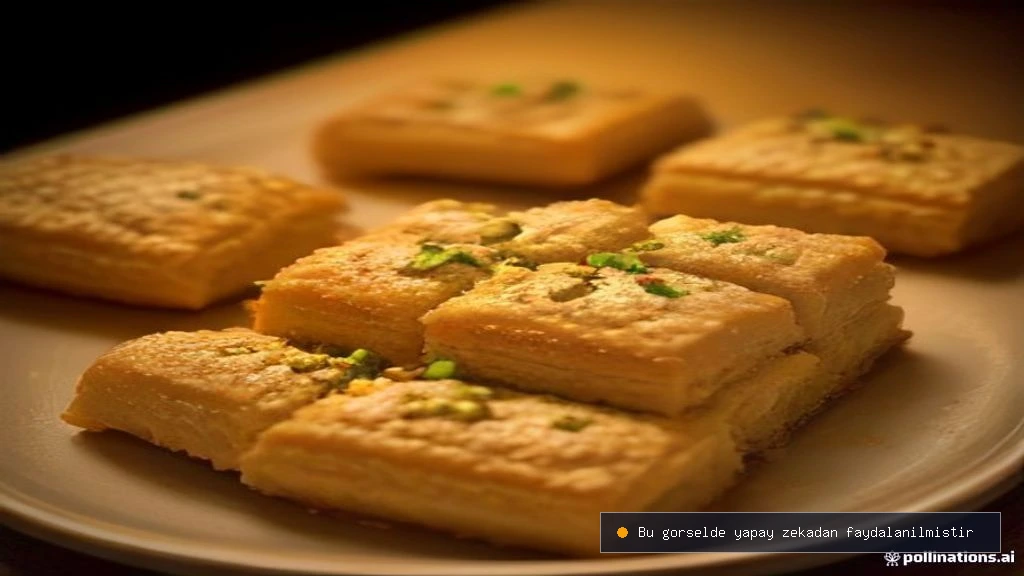
Traditional Baklava and Filo Pastry
Baklava production demands a 100% moisture-free fat with a clear melting profile and high thermal resistance. Premium vegetable ghee coats micro-thin filo layers, preventing them from sticking together while ensuring a golden-yellow hue, clean crispness, and resistance to sogginess when hot sugar syrups are applied.
Cookies, Biscuits, and Shortbread
In high-speed rotary moulder and wire-cut biscuit lines, vegetable ghee delivers superior shortening power. It reduces dough elasticity, prevents shrinking, and supports intricate embossed designs while maintaining uniform spread ratios and tender crumb textures.
High-Temperature Commercial Frying
Thanks to its high smoke point and total absence of water and hydrolyzable proteins, vegetable ghee exhibits exceptional oxidative stability during deep-frying. Industrial snack producers and donut manufacturers benefit from minimal fat breakdown, reduced foaming, low oil absorption, and consistent, non-greasy crust formation.
Culinary and Savory Food Manufacturing
For ready-to-eat meal manufacturers, commercial caterers, and canned food processors, vegetable ghee acts as a rich aromatic carrier, providing authentic butter-like mouthfeel, enhanced gloss, and emulsion stability in hot sauces, rice pilafs, and confectionery fillings.
Master Baker & Chef Production Tips
To maximize the technical and sensory performance of vegetable ghee in commercial operations, production managers and master bakers should implement the following technical best practices:
- Precise Temperature Control: Maintain dough and lamination fat at synchronized temperatures (typically between 16°C and 20°C). Working with fat that is too cold will cause shattering and tearing of dough sheets, while overly warm fat will absorb into the dough, destroying layer separation.
- Measured Fat Incorporation: In creaming operations for cakes and cookies, introduce vegetable ghee at a temperate state (20°C–22°C) alongside sugars to maximize air entrapment and bubble dispersion before adding liquid phases.
- Structured Dough Resting Periods: Allow laminated doughs to rest in temperature-controlled retarders between sheeting passes. This relaxes the gluten matrix and recrystallizes the fat, preventing shrinkage and oil bleeding during high-temperature baking.
- Gentle Melting Procedures: For baklava and brushed pastry applications, melt vegetable ghee slowly using indirect heat or jacketed melting tanks. Avoid direct high-heat contact, which can induce localized thermal shock and alter the flavor profile.
Food Safety, Halal Certification & ISO Quality Standards
Global food manufacturers require unwavering assurance regarding raw material purity, compliance, and traceability. Every batch of vegetable ghee manufactured by UNİBİS is produced in state-of-the-art facilities compliant with strict international standards.
Our manufacturing plants operate under certified ISO 9001 (Quality Management), ISO 22000, and FSSC 22000 (Food Safety Management Systems) frameworks. We enforce rigorous Quality Assurance and Quality Control (QA/QC) protocols at every phase—from raw oil reception and physical refining to deodorization, crystallization, and automated packaging.
Furthermore, all UNİBİS vegetable ghee products are 100% Halal Certified and purely vegetable-derived, making them suitable for vegetarian formulations and diverse global consumer markets. Full lot traceability, regular laboratory testing (monitoring fatty acid profiles, peroxide values, and free fatty acid levels), and complete documentation ensure seamless compliance for multinational import audits.
Optimal Storage & Shelf-Life Best Practices
Maintaining the functional properties and oxidative stability of vegetable ghee throughout its shelf life requires proper warehousing and logistics management:
- Ambient Temperature Maintenance: Store vegetable ghee in a cool, dry warehouse environment between 15°C and 25°C. Excessive heat can cause oil separation (bleeding), while freezing conditions can alter the crystal habit.
- Protection from Direct Sunlight: UV radiation accelerates photo-oxidation and rancidity. Keep packaged goods in dark or shaded storage areas away from direct sunlight exposure.
- Odor-Free Environment: Vegetable fats easily absorb strong volatile odors. Ensure storage facilities are free from aromatic spices, chemicals, and industrial cleaning agents.
- First-In, First-Out (FIFO) Inventory Control: Practice disciplined FIFO stock rotation to maintain peak functional freshness across all production schedules.
Frequently Asked Questions (FAQs)
1. What is the primary difference between vegetable ghee and commercial baking margarine?
The fundamental difference lies in moisture content. Commercial margarine typically contains 16% to 20% water and milk solids or emulsifiers, whereas vegetable ghee is an anhydrous product containing 99.8% to 100% pure fat. This makes vegetable ghee far more shelf-stable, resistant to smoking during frying, and ideal for applications where water evaporation causes shrinkage or sogginess, such as in traditional baklava and crisp pastries.
2. Can vegetable ghee replace dairy butter in industrial bakery formulations?
Yes. Vegetable ghee is widely used as a direct or partial substitute for anhydrous milk fat (butter oil) and block butter. It provides equivalent or superior shortening and layering power, extended shelf life, higher thermal stability, and cost efficiency, without introducing dairy allergens or seasonal supply volatility.
3. How does vegetable ghee affect the shelf life of packaged baked goods?
Because vegetable ghee contains virtually zero moisture and undergoes advanced physical refining, it is highly resistant to oxidative rancidity and microbial growth. When incorporated into cookies, biscuits, and dry pastries, it acts as a moisture barrier, significantly extending the ambient shelf-life stability and crispness of packaged goods.
Wholesale Supply & Export Advantages with UNİBİS Turkey
As a leading vegetable oil, ghee, and industrial margarine producer based in Turkey, UNİBİS is strategically positioned at the crossroads of Europe, the Middle East, Central Asia, and Africa. We offer global food manufacturers, wholesalers, and private label distributors distinct supply chain advantages:
- Tailored Formulations: Customized Solid Fat Content (SFC) curves, melting points, and packaging options designed to match specific regional climates and industrial production machinery.
- Scalable Industrial Capacity: High-volume, continuous manufacturing infrastructure capable of fulfilling bulk container loads, flexitanks, tins, and heavy-duty carton packaging on tight delivery schedules.
- Strategic Logistic Hub: Rapid maritime, road, and intermodal transport connections from modern Turkish ports, ensuring reduced lead times and cost-effective freight rates.
- Dedicated B2B Technical Support: Our experienced food engineers and technical specialists collaborate directly with your R&D team to optimize recipe performance, reduce production costs, and enhance finished product quality.
Partner with UNİBİS Turkey to elevate your bakery and food manufacturing standards with reliable, premium-grade vegetable ghee solutions engineered for global commercial excellence.