UNİBİS Editör
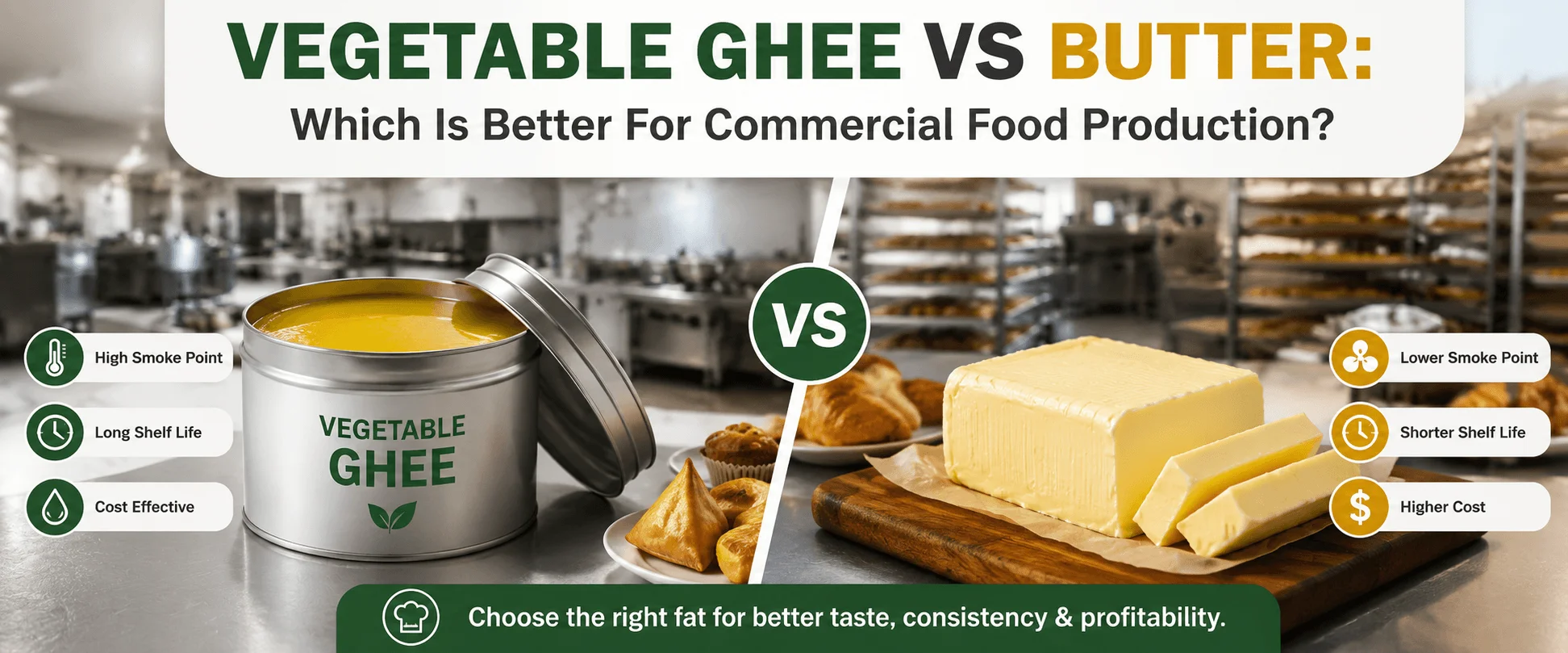
02.09.2026In the dynamic world of commercial food production, the choice of primary fat can significantly impact product quality, operational efficiency, and ultimately, profitability. For decades, butter has held a traditional place, celebrated for its unique flavor and richness. However, with advancements in food science and a growing demand for consistency, cost-effectiveness, and specialized performance, vegetable ghee and industrial margarines have emerged as formidable contenders.
At UNİBİS, Turkey's leading manufacturer of vegetable oils, ghee, and industrial margarines, we understand the critical decisions food manufacturers face. Our expertise lies in crafting superior fat solutions that meet the stringent demands of modern commercial kitchens, bakeries, and food processing plants. This guide delves into the nuanced comparison of vegetable ghee versus butter, exploring which option truly offers a better advantage for commercial food production, emphasizing culinary performance, texture, layering, and adherence to the highest quality standards that UNİBİS proudly upholds.
The Critical Role of Proper Fat & Margarine Selection in Food Manufacturing
The selection of the right fat or margarine is far more than a simple ingredient choice; it is a foundational decision that dictates the sensory profile, structural integrity, and shelf-life of a finished food product. For commercial operations, where consistency and predictability are paramount, understanding the technical contributions of fat is essential. Here’s how proper fat selection influences key aspects of food manufacturing:
- Dough Rise and Volume: In leavened products, fat plays a crucial role in tenderizing the gluten network, allowing for better gas retention and a more significant dough rise. Vegetable ghee, with its consistent plasticity, can be precisely formulated to optimize this interaction, leading to uniform volume and an airy texture across large batches.
- Flakiness and Layering: For laminated pastries like croissants and puff pastry, the fat's melting point and plasticity are critical. A fat that is too soft will melt into the dough, inhibiting distinct layers, while a fat that is too hard will break during sheeting. Vegetable ghee and specialized industrial margarines from UNİBİS are engineered to provide the ideal balance, creating crisp, well-defined layers that are consistently flaky.
- Crumb Structure and Tenderness: Fat coats starch and protein particles, interfering with gluten development and starch gelatinization, resulting in a tender crumb. The crystalline structure of vegetable ghee can be manipulated to achieve specific crumb textures, from soft and delicate in cakes to robust and chewy in certain breads, offering greater control than the variability often found in butter.
- Emulsification and Stability: In batters, sauces, and fillings, fat acts as an emulsifier, binding water and oil components to create stable, homogenous mixtures. Industrial margarines and vegetable ghee are often formulated with specific emulsifiers that enhance stability, preventing separation and extending the shelf-life of emulsified products, which is a significant advantage in commercial preparations.
- Lightness and Mouthfeel: The ability of fat to incorporate air during creaming contributes to the lightness and aerated texture of cakes and cookies. Furthermore, the melting profile of fat influences the mouthfeel, providing a smooth, desirable sensation. UNİBİS vegetable ghee products are designed to offer excellent creaming properties and a clean melt, ensuring a luxurious mouthfeel without any greasy residue.
Application Guidelines for Different Bakery & Food Categories
The versatility of fat is evident in its application across a myriad of food categories. For commercial producers, selecting a fat that performs optimally in each specific application is key to achieving consistent quality and efficiency.
Croissants, Puff Pastry & Laminated Doughs
For these delicate, multi-layered products, the fat's plasticity, melting point, and water content are paramount. UNİBİS offers specialized industrial margarines and vegetable ghee designed for lamination. These products provide:
- Superior Plasticity: Allows for easy sheeting and folding without tearing the dough or extruding the fat.
- Controlled Melting Point: Ensures the fat remains solid during lamination and baking, creating distinct layers that separate into a light, airy, and flaky texture. Butter, with its lower and less consistent melting point, can often melt prematurely, leading to a less defined crumb.
- Low Water Content: Minimizes steam generation during baking, preventing excessive puffing and ensuring a crisp finish.
Baklava & Traditional Pastries
In traditional Middle Eastern and Mediterranean pastries like baklava, fat is not just an ingredient but a flavor carrier and texturizer. UNİBİS vegetable ghee is ideal for these applications:
- Rich Aroma & Flavor: Our vegetable ghee is carefully processed to offer a clean, rich flavor that complements nuts and syrups without overpowering them.
- Exceptional Crispness: When poured over layers of phyllo dough, vegetable ghee permeates evenly, ensuring each layer bakes to a golden crispness. Its higher smoke point compared to butter also helps prevent burning during the extended baking times often required.
- Enhanced Shelf-Life: The inherent stability of vegetable ghee contributes to a longer shelf-life for these products compared to those made with butter, which is crucial for distribution.
Cookies, Cakes & Biscuits
For sweet baked goods, fat contributes significantly to texture, spread, and mouthfeel.
- Optimal Spread: UNİBİS industrial margarines can be formulated to control cookie spread, ensuring uniform size and shape across batches.
- Tender Crumb & Moistness: Our fats help create a tender crumb in cakes and biscuits, retaining moisture for a delightful mouthfeel.
- Creaming Performance: Excellent aeration properties during creaming result in lighter, more voluminous cakes and cookies.
Frying Applications (Donuts, Savory Fritters)
For deep-frying, the stability, smoke point, and flavor neutrality of the fat are critical for product quality and operational efficiency.
- High Smoke Point: UNİBİS vegetable ghee and frying margarines have significantly higher smoke points than butter, making them ideal for high-temperature frying without breaking down or producing undesirable flavors.
- Neutral Flavor Profile: Our frying fats allow the true flavor of the fried product to shine through, without imparting any unwanted tastes.
- Extended Fry Life: Formulated for stability, our frying fats resist oxidation, leading to a longer fry life and reduced oil consumption.
Culinary Applications (Sauces, Gravies, Spreads)
In savory applications, fat serves as a flavor base, thickener, and emulsifier.
- Stable Emulsions: Industrial margarines are excellent for creating stable emulsions in sauces and gravies, preventing separation.
- Consistent Performance: Unlike butter, which can vary seasonally, UNİBİS fats offer consistent performance year-round, ensuring uniform product quality.
Master Baker & Chef Production Tips
Achieving excellence in commercial food production requires not only superior ingredients but also expert techniques. Here are some master tips for optimizing the use of fats, particularly UNİBİS vegetable ghee and industrial margarines:
- Dough Temperature Control is Paramount: For laminated products, maintaining a consistent dough temperature (typically 4-10°C) is crucial. This ensures the fat remains pliable but firm, preventing it from melting into the dough during sheeting and allowing for distinct layers. Use chilled water in dough, and rest dough in refrigeration between turns.
- Precise Fat Incorporation:
- For Lamination: Ensure the fat block is at the same consistency and temperature as the dough for seamless incorporation. Evenly spread or fold the fat within the dough layers to prevent uneven rise and texture.
- For Creaming: Ensure fat is at room temperature for optimal aeration. Creaming fat and sugar together until light and fluffy incorporates air, contributing to the final product's volume and texture.
- For Rubbing-In: Keep fat cold for pastry and crumble mixes. This creates small pockets of fat that melt during baking, producing a tender, crumbly texture.
- Adequate Resting Periods: Do not rush the process. Resting doughs, especially laminated ones, in a cold environment (e.g., 30 minutes between turns for puff pastry) allows the gluten to relax and the fat to firm up. This prevents shrinkage, tearing, and ensures optimal flakiness.
- Optimal Melting Techniques for Specific Applications:
- For Baklava & Pastries: Gently melt vegetable ghee over low heat to avoid scorching. Clarifying it further (if desired, though UNİBİS ghee is already highly refined) can remove any residual milk solids, leading to a purer flavor and crispier result.
- For Sauces & Roux: Melt fat slowly to achieve the desired consistency and to properly cook flour for roux, ensuring a smooth, lump-free sauce base.
- Leverage Fat Functionality: Understand the specific properties of the UNİBİS fat product you are using. Our technical team can provide guidance on the ideal melting point, plasticity, and emulsifying properties for your unique application, allowing you to fine-tune your recipes for superior results.
Food Safety, Halal Certification & ISO Quality Standards
For any commercial food producer, food safety and compliance with international quality standards are non-negotiable. At UNİBİS, these principles are at the core of our operations, ensuring that every product we deliver meets the highest benchmarks for purity, safety, and ethical production.
Production in Hygienic, State-of-the-Art Facilities
Our manufacturing plants are designed and operated with an unwavering commitment to hygiene. We utilize advanced, automated systems that minimize human contact, reducing the risk of contamination. Regular cleaning and sanitation protocols are rigorously enforced, adhering to global best practices in food manufacturing.
Strict Quality Assurance & Quality Control (QA/QC) Testing
UNİBİS implements a comprehensive QA/QC program throughout the entire production chain, from raw material sourcing to final product packaging. Each batch undergoes extensive laboratory testing for:
- Physical Parameters: Melting point, plasticity, texture, and color.
- Chemical Parameters: Free fatty acids, peroxide value, iodine value, and fat composition to ensure stability and freshness.
- Microbiological Purity: Rigorous testing to ensure products are free from harmful pathogens and meet international safety standards.
Full Traceability
We maintain a robust traceability system that allows us to track every ingredient from its origin through all stages of processing and distribution. This ensures complete transparency and accountability, enabling swift action if any quality issue arises and providing peace of mind to our commercial partners.
Certified International Standards
UNİBİS is proud to hold numerous international certifications that attest to our commitment to quality and safety:
- Halal Certification: Our products are certified Halal, ensuring they meet the dietary laws and purity requirements for Muslim