UNİBİS Editör
19 October 2026The global food manufacturing, industrial bakery, and HoReCa sectors demand precision, consistency, and thermal resilience from their core ingredients. In high-volume food processing, edible fats and oils are not merely cooking mediums; they are structural building blocks that define mouthfeel, aroma, shelf-life stability, and visual presentation. Operating from the industrial crossroads of Europe and Asia, UNİBİS has established itself as Turkey's premier manufacturer of high-performance vegetable oils, premium culinary ghee, and tailored industrial margarines. By leveraging cutting-edge refining and fractionation technologies, UNİBİS supplies global markets with fat solutions engineered to withstand demanding operational conditions while elevating end-product appeal.
Whether formulating crispy snack pellets requiring ultra-stable frying oil or creating delicate, multilayered pastries utilizing the rich, traditional profiles of Turkey ghee, modern commercial operations require functional fats with predictable crystallization curves and exceptional thermal resistance. UNİBİS bridges the gap between traditional artisanal culinary standards and modern, high-throughput automated production lines.
The Critical Role of Proper Fat & Margarine Selection in Food Manufacturing
Every commercial food application presents a distinct rheological and chemical challenge. Selecting the correct fat matrix determines whether a product achieves superior sensory qualities or suffers from premature staling, oil weeping, or structural collapse. Key functional attributes governed by fat selection include:
- Optimized Dough Rise and Aeration: Proper creaming fats incorporate microscopic air cells into batter systems, ensuring an even cell structure and higher volume in finished cakes, biscuits, and extruded doughs.
- Structural Flakiness and Lamination: For laminated doughs, the fat must exhibit an expansive plasticity range, preventing premature melting or fracturing under mechanical rollers to separate pastry sheets cleanly.
- Crumb Structure and Softness: The interaction between tailored fat crystals and starches delays retrogradation, maintaining crumb elasticity and extending packaged freshness.
- Stable Emulsification: Well-balanced mono- and diglyceride systems ensure water-in-oil emulsions remain intact during high-shear commercial blending, preventing moisture separation during baking.
- Lightness and Palatability: High-purity fats and deodorized frying oils melt cleanly below human body temperature, eliminating waxy mouth-coating and allowing primary flavor profiles to emerge.
Application Guidelines for Different Bakery & Food Categories
Industrial formulations require specialized fat characteristics depending on the specific baking or cooking application. UNİBİS provides targeted ingredient lines designed for specific food manufacturing processes:
Croissants and Danish Pastries
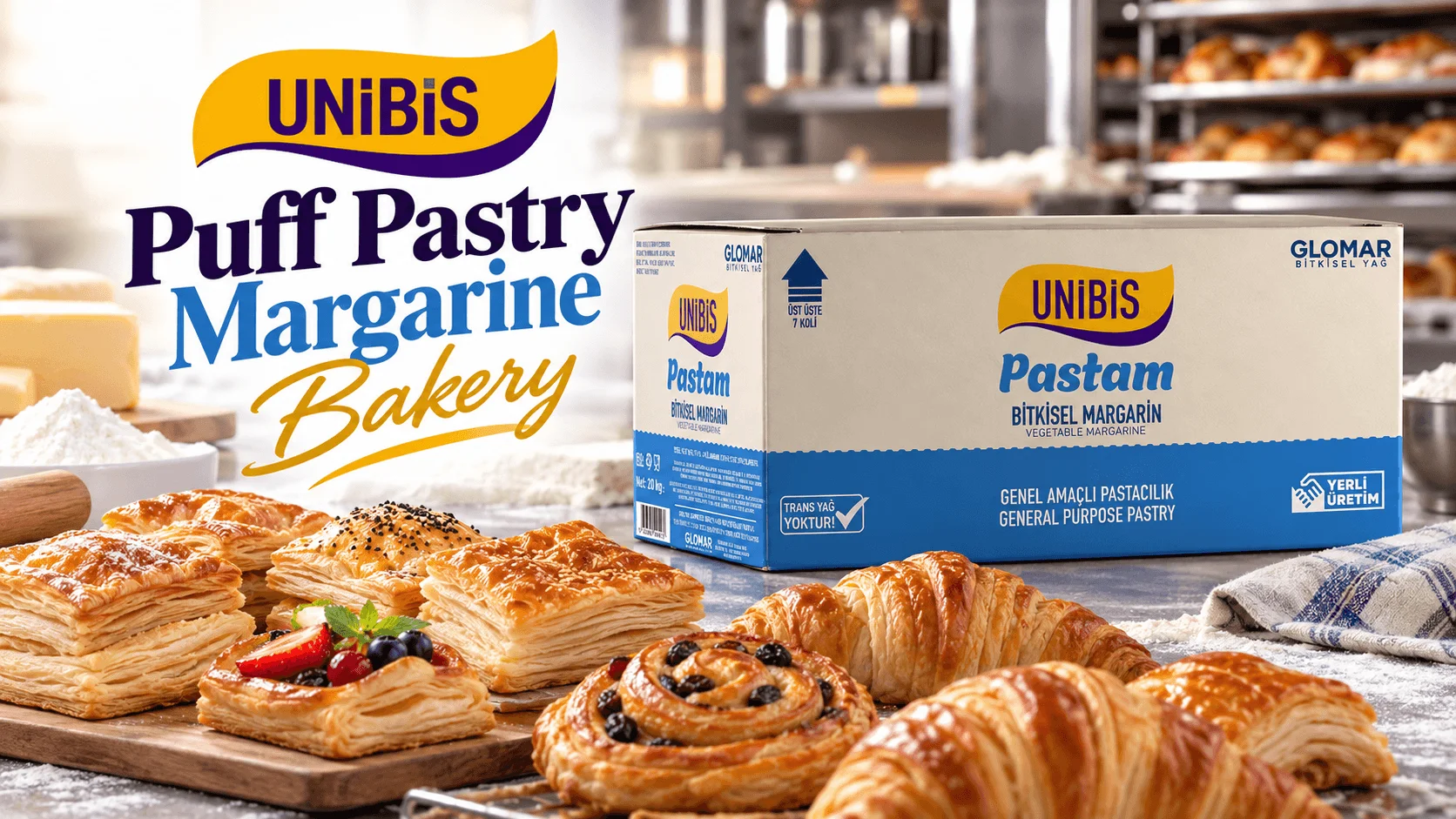
Laminated yeast doughs demand industrial pastry margarines with high plasticity and a tailored solid fat content (SFC). The fat must stretch into continuous, micro-thin layers without breaking under mechanical stress, resulting in the coveted honeycomb interior crumb and crisp exterior shell.
Puff Pastry
Non-yeasted puff pastries rely entirely on steam expansion generated between alternating layers of dough and fat. High-melting-point puff pastry margarines prevent fat absorption into the dough sheets prior to baking, maximizing lift, flake definition, and volume.
Traditional Baklava and Sweets
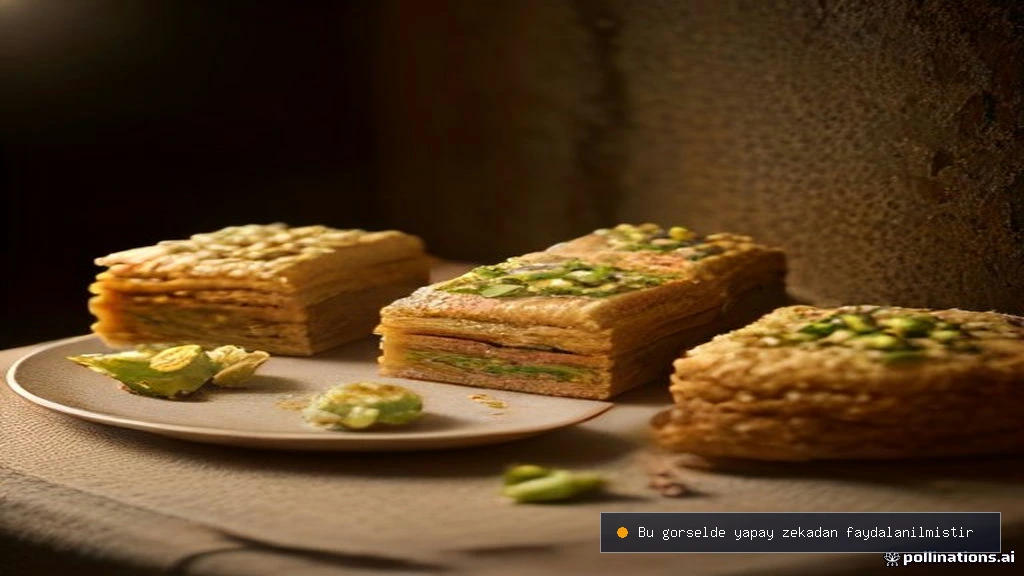
Authentic baklava, kunafa, and phyllo-based confectionery require premium clarified butter substitutes or authentic Turkey ghee. Characterized by virtually zero moisture and superior aromatic compounds, UNİBİS ghee formulations provide the signature golden color, distinct buttery flavor, and non-soggy crispness essential for premium Middle Eastern and Mediterranean confections.
Industrial Biscuits and Cookies
Shortbreads and wire-cut cookies demand short-crust fats with rapid creaming capacity. The fat coats flour particles to inhibit excessive gluten development, yielding a tender, crumbly bite with controlled dough spread on industrial baking belts.
Commercial Deep Frying and Snack Pellets
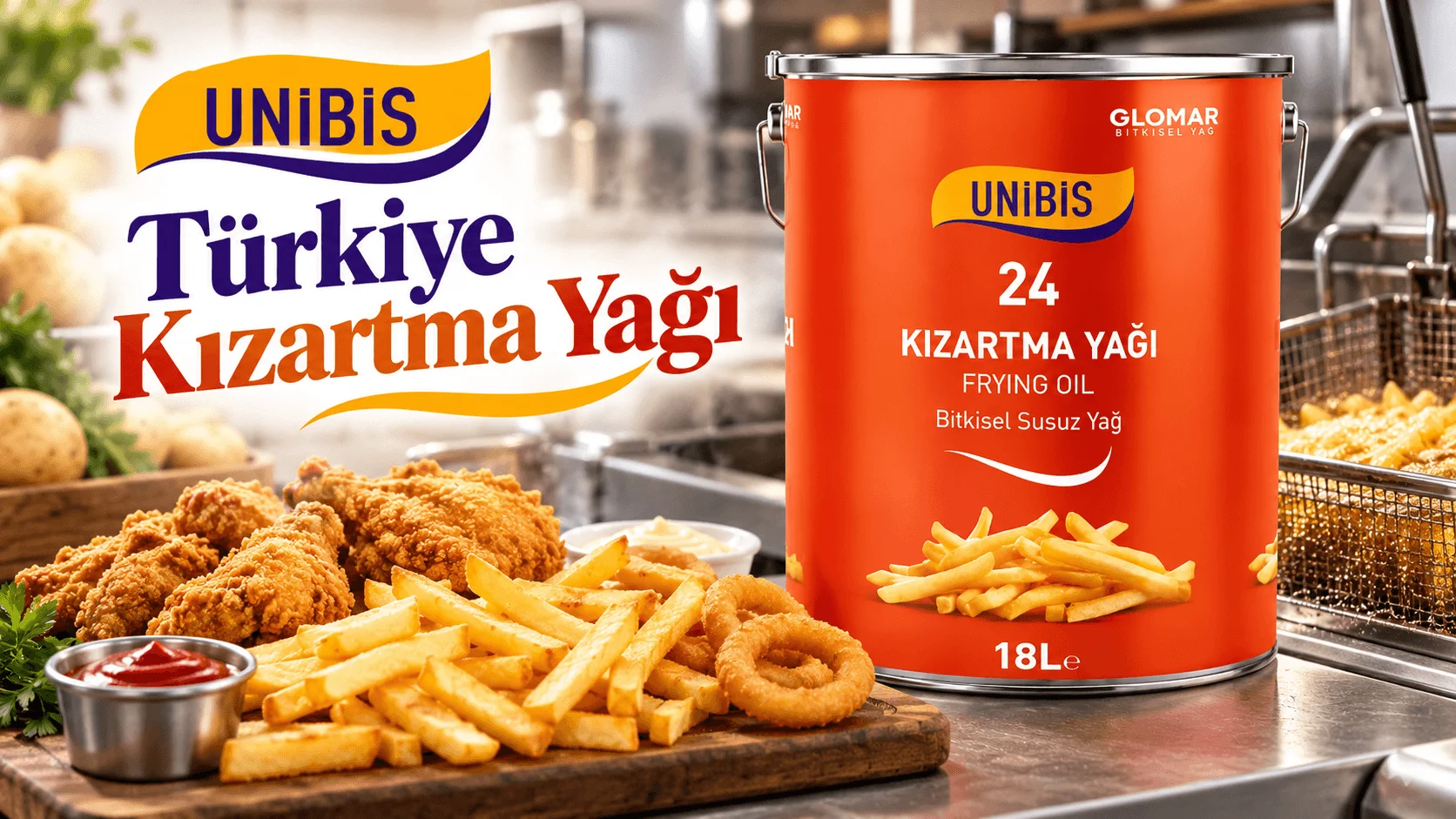
High-volume continuous frying operations necessitate specialized frying oil from Turkiye that resists thermal oxidation, foaming, and polymerization. UNİBİS frying oils offer high smoke points and low polar compound generation, ensuring snack foods, crisps, and breaded items absorb minimal oil and retain an extended shelf life.
Master Baker & Chef Production Tips
Maximizing fat performance on commercial processing lines requires careful attention to thermal dynamics and handling protocols:
- Strict Dough Temperature Control: Maintain dough and laminating fat within the same temperature window (ideally 16°C to 19°C for puff pastries). Mismatched temperatures cause fat shattering or premature absorption.
- Gradual Fat Incorporation: In brioche and enriched bread production, add fats only after gluten development is partially established to avoid coating protein strands prematurely, which can lengthen kneading times.
- Adequate Resting Periods: Laminated doughs must rest between sheeting cycles to relieve internal gluten tension, preventing uneven pastry shrinkage during baking.
- Optimal Melting and Frying Control: When utilizing high-smoke-point frying oils or melting industrial ghee, melt blocks gradually below 60°C to prevent scorch points. Maintain active frying temperatures between 170°C and 180°C to prevent excess fat uptake in the final product.
Food Safety, Halal Certification & ISO Quality Standards
Industrial compliance is central to the UNİBİS manufacturing philosophy. Operating modern processing and packaging facilities in Turkey, our production protocols meet rigorous international food safety criteria.
Every batch of vegetable oil, ghee, and industrial margarine undergoes comprehensive quality assurance testing, analyzing parameters such as Free Fatty Acid (FFA) levels, Peroxide Value (PV), Rancimat oxidative stability, and fatty acid composition via gas chromatography. UNİBİS operations are fully compliant with ISO 9001 (Quality Management) and ISO 22000 (Food Safety Management) standards, alongside internationally recognized FSSC 22000 benchmarks. Furthermore, our entire portfolio holds authentic Halal certification, guaranteeing purity, traceability, and ethical compliance for diverse global consumer markets.
Optimal Storage & Shelf-Life Best Practices
To preserve functional plasticity, oxidative stability, and clean sensory attributes, proper warehouse management is critical for wholesale inventory:
- Shielding from Direct Sunlight and UV Radiation: Light acceleration triggers photo-oxidation, leading to rancid notes and degradation of natural carotenes. Store products in dark or enclosed pallet bays.
- Controlled Ambient Temperatures: Store margarines and shortenings within a temperature-controlled environment (recommended between 12°C and 18°C). Avoid freezing, which fractures emulsion stability, and excessive heat, which causes oil separation.
- Odor-Free Environment: Vegetable fats and concentrated ghee easily absorb volatile ambient odors. Keep inventory isolated from paints, diesel exhausts, aromatic spices, and chemicals.
Frequently Asked Questions (FAQs)
1. What makes Turkish-manufactured ghee suitable for high-volume baklava and confectionery production?
Turkey has a rich heritage of layered pastry production. Turkish-manufactured ghee from UNİBİS is tailored with near-zero moisture content, high thermal resistance, and authentic rich profiles. It prevents delicate phyllo sheets from turning soggy while delivering an aromatic, golden finish that premium pastry manufacturers require.
2. How does using specialized industrial frying oil lower total operational costs for food processors?
High-stability frying oils exhibit superior resistance to breakdown, free fatty acid build-up, and polymerization at high temperatures. This extended vat life reduces the frequency of oil changes, lowers product oil pick-up, and produces a crispier end product with extended ambient packaging stability.
3. Can UNİBİS customize margarine melting points for hot-climate export destinations?
Yes. UNİBİS provides contract formulation and tailored Solid Fat Content (SFC) curves. We can calibrate slip melting points and plasticity ranges specifically to endure transport and ambient production conditions in hot climates without compromising workability.
Wholesale Supply & Export Advantages with UNİBİS Turkey
As a global B2B supplier, UNİBİS leverages Turkey's strategic maritime and overland trade corridors to deliver fast, cost-effective freight options to Europe, the Middle East, Africa, Central Asia, and the Americas. Food manufacturers, industrial bakeries, and distribution partners benefit from flexible packaging choices, ranging from industrial 10kg, 15kg, and 20kg cartons with food-grade inner liners to 200L drums, 1000L IBC totes, and bulk flexitanks for continuous frying lines.
Partnering with UNİBİS ensures a secure, traceable supply chain backed by experienced food technologists, reliable quality consistency, and cost-efficient production. Contact our commercial export team today to request product specifications, custom formulations, and wholesale quotation terms tailored to your regional operations.