UNİBİS Editör
19 October 2026In modern industrial baking, the distinction between an acceptable baked good and an extraordinary pastry lies in the precise science of fat selection. Commercial bakeries, food processors, and HoReCa operators face constant pressure to achieve superior volume, distinct lamination, and long-lasting freshness while managing formulation costs and production efficiency. Pastry margarine serves as the functional backbone of high-performance dough systems. Its unique crystal structure, customized melting curve, and balanced elasticity directly determine the success of laminated doughs, shortcrusts, and aerated bakery goods. As Turkey's premier manufacturer of industrial vegetable oils, vegetable ghee, and specialized margarines, UNİBİS engineers high-stability fat solutions that deliver consistent culinary performance across automated production lines and artisanal bakeries worldwide.
The Critical Role of Proper Fat & Margarine Selection in Food Manufacturing
Fats are not merely tenderizers in industrial food production; they are active functional ingredients that govern mechanical dough handling, thermodynamic expansion, and consumer sensory perception. Choosing an engineered pastry margarine over generic vegetable fats yields measurable improvements across key production metrics:
- Optimized Dough Rise and Volumetric Expansion: High-performance pastry margarine creates continuous, unbroken physical barriers between alternating dough sheets. During baking, the water phase within the emulsion vaporizes, lifting the dough layers before the fat is fully absorbed into the gluten matrix. This process produces exceptional vertical rise and open, honeycomb internal architecture.
- Defined Flakiness and Layer Integrity: The plasticity of the fat must match the rheology of the dough. Premium pastry margarine possesses a broad working temperature range that prevents the fat from fracturing into brittle shards or melting prematurely into the flour, ensuring razor-sharp layer separation.
- Refined Crumb Structure and Aeration: In non-laminated applications, specific industrial margarines maximize air entrapment during mechanical creaming. The resulting beta-prime crystal configuration stabilizes microscopic air pockets, producing a fine, uniform crumb that resists crumbling and mechanical transit damage.
- Superior Emulsification and Moisture Retention: Formulated with balanced food-grade emulsifiers, specialized bakery margarines bind free water within the dough matrix. This retardant action against starch retrogradation significantly prolongs product freshness, softness, and commercial shelf life.
- Lightness, Texture, and Clean Palate Release: Industrial margarines must have a steep Solid Fat Content (SFC) drop near body temperature. This characteristic delivers a light, non-greasy mouthfeel and rapid flavor release without leaving a waxy residual film on the palate.
Application Guidelines for Different Bakery & Food Categories
Every industrial bakery category demands a customized fat profile engineered for specific mechanical stresses, oven profiles, and shelf-stability requirements:
Croissants, Danishes, and Sweet Laminated Pastries
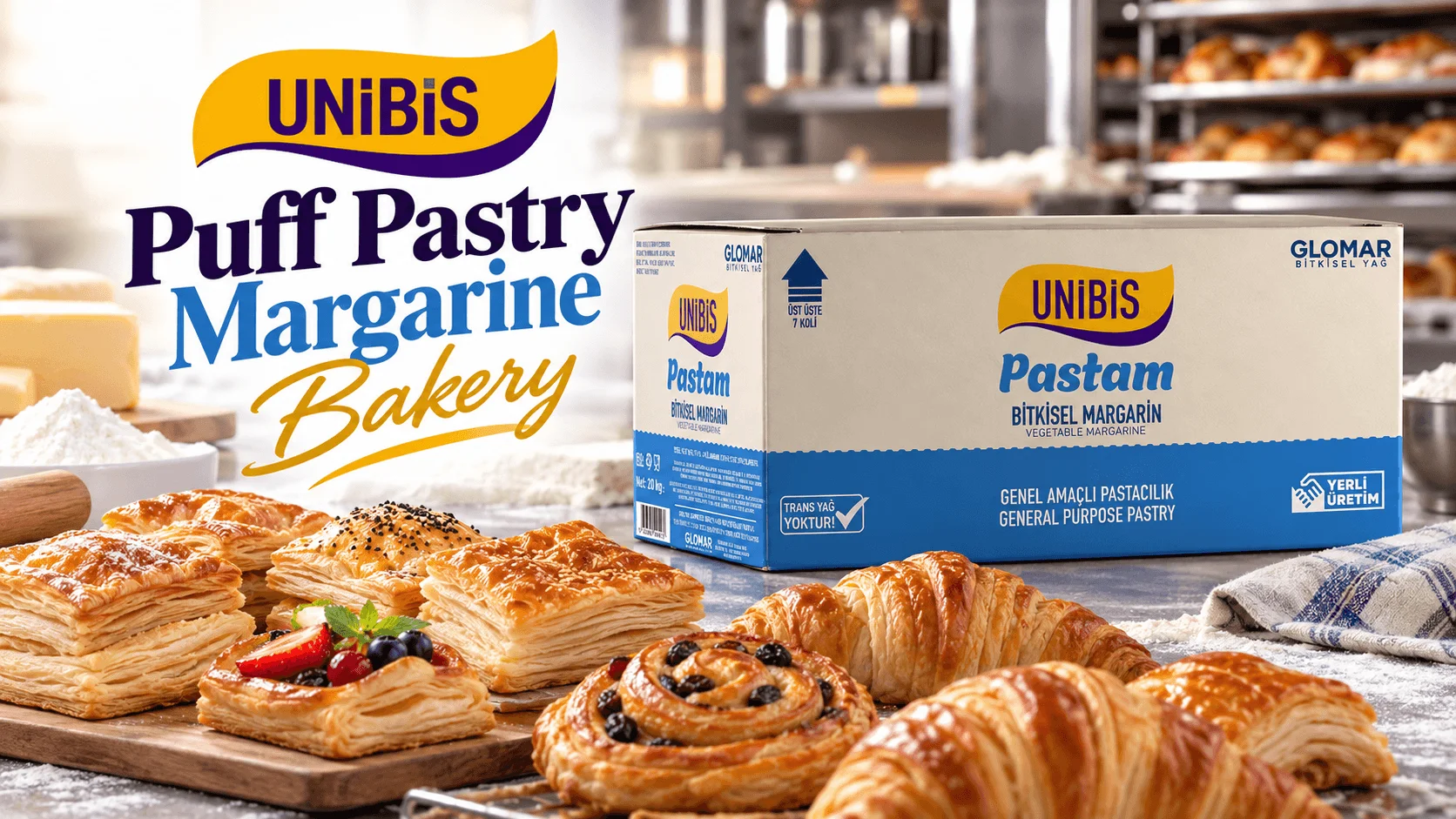
Laminated yeast doughs require a pastry margarine with high tensile plasticity and elasticity. The fat must withstand repeated cross-sheeting and reduction passes on automated laminators without tearing the delicate yeast-developed gluten network. UNİBİS pastry margarines engineered for croissants feature a controlled melting profile (typically between 38°C and 42°C), providing sufficient stability during proofing stages without leaving a greasy mouthfeel after baking.
Puff Pastry and Savory Enrobed Goods
Classic puff pastry applications (mille-feuille, vol-au-vents, sausage rolls) rely entirely on physical steam leavening rather than yeast or chemical agents. This requires high-melting, heavy-duty laminating margarine capable of maintaining distinct layer separation across dozens or hundreds of folds. The result is an airy, crisp product with high vertical lift and delicate, flaky crusts that resist moisture migration from savory fillings.
Traditional Baklava and Thin Filo Applications
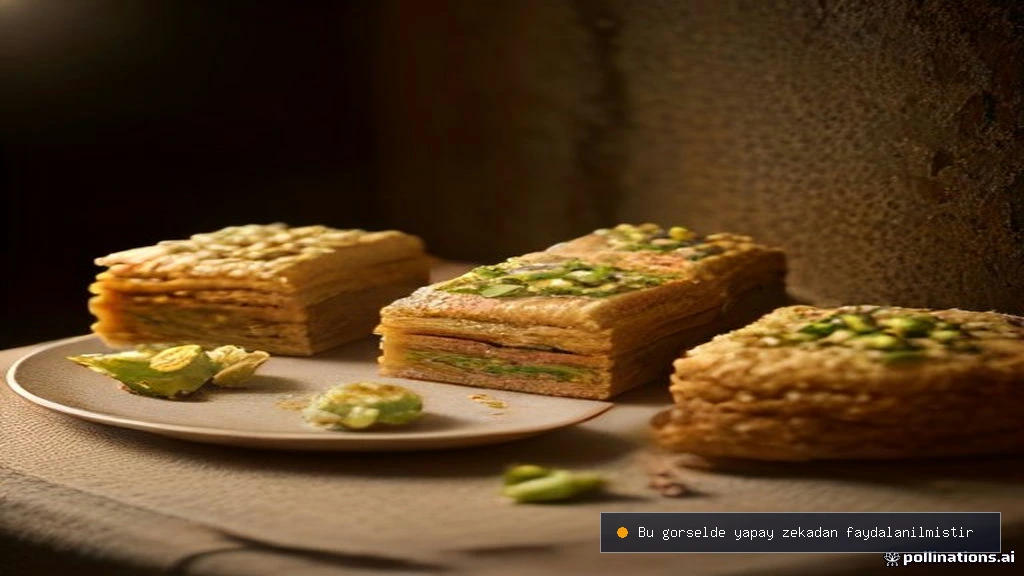
Filo-based pastries demand fats with low moisture levels and exceptional thermal stability. Specialized bakery fats and vegetable ghee alternatives provide the translucent sheen, audible crispness, and rich traditional flavor profile essential for premium baklava. Because these formulations minimize water content, they protect thin starch sheets from becoming soggy, guaranteeing a crisp texture throughout commercial retail distribution.
Biscuits, Shortbreads, and Industrial Cookies
Short-dough formulations benefit from soft, highly creamable margarines designed to coat flour proteins and restrict gluten development. This produces a tender, crumbly bite and prevents structural shrinkage or warping during rapid tunnel-oven baking. Controlled fat crystallization also prevents excessive oil bleed-out on packaging materials.
Industrial Frying and Ready-Meal Components
For par-fried bakery items, donuts, and savory dough enrobers, fats must offer extreme oxidative resistance and high smoke points. The absence of easily degraded impurities minimizes polymerization, foaming, and off-flavor development during continuous high-temperature commercial frying.
Master Baker & Chef Production Tips
Industrial scale and artisanal excellence both depend on strict adherence to fat handling protocols. Master bakers and production plant managers should incorporate the following operational practices:
- Synchronize Fat and Dough Temperatures: The most frequent cause of lamination failure is temperature mismatch. If the margarine is colder than the dough, it will shatter and puncture the layers; if it is warmer, it will absorb into the dough. Maintain both your resting dough and your pastry margarine within a synchronized temperature window of 16°C to 20°C during sheeting.
- Employ Progressive Sheeting Passes: Avoid aggressive single-pass thickness reductions on the laminator. Reduce dough thickness gradually (no more than 20–30% reduction per pass) to maintain uniform fat membrane thickness across the entire width of the dough sheet.
- Mandatory Resting Periods: Laminated dough requires intermediate resting in temperature-controlled retarders between folding cycles. This relaxes the gluten network, relieves mechanical stress, and re-crystallizes the fat matrix, preventing product shrinkage and misshapen bakes.
- Maintain Oven Steam Calibration: During the initial minutes of baking puff pastry and croissants, introduce controlled steam injection. Steam keeps the outer dough extensible for a few extra moments, allowing the pastry margarine to achieve maximum vertical expansion before the outer crust caramelizes and sets.
Food Safety, Halal Certification & ISO Quality Standards
In global food supply chains, ingredient performance must be matched by documented regulatory compliance and food safety standards. At UNİBİS, our state-of-the-art production facilities in Turkey operate under rigorous, internationally recognized manufacturing protocols:
Every production batch undergoes automated closed-loop refining, bleaching, deodorization, and crystallization to prevent contamination and maintain absolute chemical purity. Our quality assurance laboratories monitor key parameters including Free Fatty Acids (FFA), Peroxide Values (PV), Solid Fat Content (SFC) curves, and Slip Melting Points in real time. UNİBİS operates under certified ISO 9001 Quality Management and ISO 22000 / FSSC 22000 Food Safety Management systems.
Furthermore, all our vegetable fats and pastry margarines are 100% plant-based, non-hydrogenated options, free from animal fats, and backed by accredited Halal Certification. Complete batch traceability from sustainably sourced crude vegetable oils to the final boxed fat block guarantees that our international commercial partners receive safe, compliant, and ethically produced ingredients.
Optimal Storage & Shelf-Life Best Practices
To preserve the crystal integrity, plasticity, and flavor profile of industrial pastry margarine throughout its declared shelf life, commercial facilities should implement standardized storage controls:
- Temperature Regulation: Store pastry margarine in a dry, well-ventilated warehouse maintained between 12°C and 18°C. Avoid exposing pallets to temperatures above 22°C, which can cause oil separation and irreversible loss of beta-prime crystal structure.
- Protection from Direct Light: Fats undergo photo-oxidation when exposed to UV light. Store cartons away from direct sunlight, sealed inside their original polyethylene liners until immediately prior to production.
- Odor Isolation: Refined vegetable fats readily absorb ambient volatile organic compounds. Store margarine pallets away from strong aromatic ingredients, spices, cleaning chemicals, or raw engine emissions in loading bays.
- First-In, First-Out (FIFO) Rotation: Strictly enforce FIFO inventory procedures to ensure that fats are consumed within their prime functional window, maintaining optimal plasticity on high-speed production lines.
Frequently Asked Questions (FAQs)
What is the ideal melting point for pastry margarine used in high-speed industrial laminators?
For automated industrial laminators, the ideal slip melting point typically ranges between 39°C and 43°C, depending on ambient plant temperatures and dough formulations. This ensures that the fat retains structural elasticity under heavy mechanical sheeting without smearing into the dough or leaving a waxy mouthfeel in the final product.
Can specialized vegetable pastry margarine fully replace dairy butter in commercial bakery applications?
Yes. Premium pastry margarines are specifically engineered to offer higher mechanical plasticity, wider working temperature windows, and lower formulation costs compared to dairy butter. They deliver comparable oven lift and crisp lamination, while specialized clean-label aromatic systems reproduce the traditional buttery flavor profiles expected by consumers.
How does UNİBİS ensure consistency across international export shipments?
UNİBİS uses automated crystallization units and standardized analytical controls across every production lot. For long-distance export logistics, we utilize climate-controlled reefer containers or moisture-barrier protective packaging to ensure that the Solid Fat Content and crystal plasticity remain stable from our Turkish manufacturing facility to your processing plant.
Wholesale Supply & Export Advantages with UNİBİS Turkey
Sourcing your industrial fats from Turkey provides significant strategic advantages for global food manufacturers, retail distributors, and bakery groups. Geographically positioned at the crossroads of Europe, the Middle East, Central Asia, and North Africa, Turkey serves as a premier logistics hub offering fast maritime transit times, reliable overland transport, and competitive tariff frameworks.
UNİBİS stands at the forefront of this industrial landscape. We offer flexible B2B packaging formats—including 10 kg and 20 kg bulk cartons, pre-measured laminated sheets/plates for artisan bakeries, and industrial drums or intermediate bulk containers (IBCs) for large-scale processors. Beyond our standard product catalog, our food engineers collaborate directly with procurement and R&D teams to develop custom fat formulations tailored to local tastes, plant equipment, and target price points. Partner with UNİBİS to elevate your bakery product quality, stabilize your raw material supply chain, and gain a decisive edge in the competitive commercial food market.